For those not in the know, fibromyalgia is a syndrome. This means that it has a number of characteristic symptoms, and patients have a selection of them. One of mine - visual disturbances.
This can lead to migraines, floaters, light sensitivity and muscle tiredness. At the end of the day, when I'm tired from having looked at a computer screen for most of the day, I find it difficult to read. I've carried books around with me since I was a toddler, so not being able to read is uncomfortable to me. What to do with the time?
So I decided to download a couple of audiobooks. This rankled for three reasons.
First of all, I'm a traditionalist. Despite the fact that owning a Kindle would be easier on my wrists (because it's lighter - the weight of paper books can hurt me) I still haven't managed to bite the bullet and buy one. I have an emotional block. I like ink, paper and being able to mark my page with a bus ticket. Audiobooks are the same deal for me. It's like someone trying to convince you that paper plates really are the classier alternative to ceramic.
Secondly, it makes me feel old. I'm 24, and I already feel like a pensioner the majority of the time. I have fibro and inflammatory arthritis. I wear glasses, sensible shoes, and occasionally have to use a walking stick.I have to pace myself, and not over exert myself or I may need to go for a nap. I've come to terms with all this, but nothing, NOTHING has made me feel as old as downloading audiobooks.
This is irrational. Plenty of people download books to listen to while commuting to work or doing household chores. It makes sense. It's only in my head that I see my ninety year old great grandmother listening to her Catherine Cookson tapes.
I found the audiobooks ok, but the price was ridiculous. You can pay twice as much for an audiobook as you do for a paperback, and that's a conservative estimate. Considering an average book is five hours long when read aloud, this is pretty steep.I know you have to pay the narrator, sound engineer and get the book adapted but it makes reading expensive for those with eyesight issues. At least I have a choice.
What about you? Do you 'read' audiobooks?
Showing posts with label books. Show all posts
Showing posts with label books. Show all posts
Tuesday 4 October 2011

Tuesday 27 September 2011
Sexism in Writing
I've recently started preliminary research for my history phd, which is very exciting (to me, anyway). My research doesn't centre around gender, but the growing role of women in medical practice during the late nineteenth and early twentieth centuries is part of the background. Women were viewed (by men who were afraid of more competition for jobs) to be too emotional for the meticulous scientific practice of medicine. Seems strange to think of now, though many women of the time held that view too.
Nowadays, western women live in societies that purportedly embrace equality. And I think that men and women are generally different. But the way in which chick-lit writers are regarded shows that in writing, at least, there is still a long way to go.
Novelist Talli Roland wrote an insightful (and brilliantly titled) blog post last week that asked the question: why do women feel the need to apologise for the type of books they write. Men can write light fiction, and it isn't viewed as a sum of their total intellectual abilities. With women, a pastel cover apparently indicates: stupid, frivolous content.
Why haven't we moved on from this pettiness? I'm not going to get into the many issues that chick-lit has covered, because Talli is right. It shouldn't need to be defended. And honestly? The people who spout this ridiculousness tend to have a chip on their shoulder, and their comments say more about them than the genre they're taking shots at. Like with the nineteenth century medical profession, these comments are more a sign of their fear of becoming irrelevant to the discussion.
Nowadays, western women live in societies that purportedly embrace equality. And I think that men and women are generally different. But the way in which chick-lit writers are regarded shows that in writing, at least, there is still a long way to go.
Novelist Talli Roland wrote an insightful (and brilliantly titled) blog post last week that asked the question: why do women feel the need to apologise for the type of books they write. Men can write light fiction, and it isn't viewed as a sum of their total intellectual abilities. With women, a pastel cover apparently indicates: stupid, frivolous content.
Why haven't we moved on from this pettiness? I'm not going to get into the many issues that chick-lit has covered, because Talli is right. It shouldn't need to be defended. And honestly? The people who spout this ridiculousness tend to have a chip on their shoulder, and their comments say more about them than the genre they're taking shots at. Like with the nineteenth century medical profession, these comments are more a sign of their fear of becoming irrelevant to the discussion.
Monday 26 September 2011
Jane Eyre
Have you ever seen a film so beautiful that it makes you feel like crying because you know you're never going to be able to create something so heartbreakingly perfect?
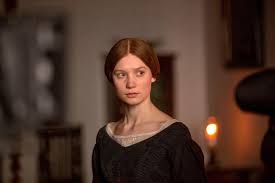 That was my experience with watching Jane Eyre.
I was a little apprehensive about seeing this movie, because I really enjoyed the book. The book is quite dark ( I mean, come on - it was written by a Bronte sister) and I find that some adaptations try to lighten up the story. Which I really don't like. Also, the story is quite melodramatic in nature, and it's hard to do well without going ridiculously overboard. But this adaptation managed to retain the dark threads of the story while remaining believable at all times.
The book starts off very slowly, and the film dealt with this very well. It started with Jane fleeing Thornfield and arriving at the home of St. John Rivers. Most of the story is told through a series of flashbacks, which deals nicely with the slow start. The film is beautifully shot, with fantastic performances from Michael Fassbender and Judi Dench. The real strength of the film, however, lies in Mia Wasikowska's performances. She portrays the multi-faceted Jane Eyre so well that it's hard to credit the fact that she's only 21. It's lovely to see a film adaptation of a book that adds to your understanding of the former, rather than failing to live up to your expectations.
What about you? Do you ever get disheartened when you see genius that you can't hope to replicate? Or do you find it inspirational?
I was a little apprehensive about seeing this movie, because I really enjoyed the book. The book is quite dark ( I mean, come on - it was written by a Bronte sister) and I find that some adaptations try to lighten up the story. Which I really don't like. Also, the story is quite melodramatic in nature, and it's hard to do well without going ridiculously overboard. But this adaptation managed to retain the dark threads of the story while remaining believable at all times.
The book starts off very slowly, and the film dealt with this very well. It started with Jane fleeing Thornfield and arriving at the home of St. John Rivers. Most of the story is told through a series of flashbacks, which deals nicely with the slow start. The film is beautifully shot, with fantastic performances from Michael Fassbender and Judi Dench. The real strength of the film, however, lies in Mia Wasikowska's performances. She portrays the multi-faceted Jane Eyre so well that it's hard to credit the fact that she's only 21. It's lovely to see a film adaptation of a book that adds to your understanding of the former, rather than failing to live up to your expectations.
What about you? Do you ever get disheartened when you see genius that you can't hope to replicate? Or do you find it inspirational?
Friday 2 September 2011
Friday Fives, Attention Grabbing Titles, and Writing Update

1: Across the Barricades by Joan Lingard: This is a story about two teenagers who fall for each other in 1970s Belfast. Sadie is Protestant and Kevin is Catholic, and in the political climate of Northern Ireland in 1973 this makes their relationship very difficult. I love the title because it sounds so stark. It lets you know at the start that there are high stakes and possible violence in the story.
2: Divergent by Veronica Roth: I love this title because it works on two levels. Not only is the word used to describe the protagonist, but because it literally means 'going the other way'. Again, this tells you that this is a story about going against the grain of society.
3: Twilight by Stephenie Meyer: I love this title, really atmospheric. It also describes that period in adolescence where you're not quite a child, but not quite an adult either. A time of transition, which is really what the series is about underneath it all.
4: The Northern Lights by Phillip Pullman: This is the first book in the His Dark Materials trilogy, known as The Golden Compass in the US. I've always been fascinated by the northern lights, and was taken in by the mysteriousness of the title.
5: Wintergirls by Laurie Halse Anderson: This is a book that I haven't read yet, but the title is attention grabbing. Especially for a book concerning eating disorders.
Writing update: I have my foster placement 24 hours at this point, and I've managed to get 2,000 words down. So I'm not doing too badly. Hopefully I'll get some more work done this evening.
Hope you all have a great weekend!
Thursday 25 August 2011
My Name is Christine...and I'm Addicted to Books
When we moved in together, the problem was hidden by my illness. For two months I didn't read a single book, and in hindsight that should have been my first hint that I needed to go to the doctor. When you've constantly add a book on the go since you were a toddler (holding a book upside down still counts, you know) then suddenly not caring about reading should have set off the panic alarms. But I had just finished my final college exams in history, a subject well known for its heavy reading list, and we presumed that I was just burnt out. Anyway, even if I had suspected that something was seriously awry, I was feeling way to lethargic to actually do anything about it.
I was married and on honeymoon before I read another book. I was on medication for inflammatory arthritis by then, and felt clear enough to read Breakfast at Tiffany's (I was honeymooning in New York, it was the obvious choice). I only bought one book there, and a magazine of short stories. Again, very strange for me, but I didn't realise it at the time.
Back home, with a fibromyalgia diagnosis finally under my belt and some effective medication, I began reading again in earnest. I discovered young adult urban fantasy, and started writing my first novel. Slowly, my reading climbed up to its pre-illness level, and our Ikea bookshelf began to fill up. So much that we had to buy a new one. Books were stacked on window sills, on my bedside table, and on my office desk. So much so that I started to do that tell-tale addict activity: hide the signs of my purchases.
I was reading a book a day, or at least every two, so I stuffed all the paper bags from bookshops into the green bin when my husband wasn't looking. It's not that he would mind, he's very easy going, but because I was embarrassed.
He recently asked me to consider throwing out my books. I gave around a dozen to a charity shop, and called a halt to it there. He brought up the subject again the other day, talking about how much space my books take up. I now have a couple of cardboard cartons full of books in the cupboard under the stairs. However I pointed out, reasonably enough, that I let him have his Warhammer models on full display, so he needed to be respectful of my collection. He left it at that, though he does seem overly keen for me to get a Kindle. To help my hands, apparently. Hmmm.
Thursday 28 July 2011
Review: Divergent by Veronica Roth

I bought Divergent to take away on holiday, pulled in by its shiny cover, my love of all things dystopian and favourable mentions on blogger. Also because it was part of a three books for the price of two special in Eason's book shop on O'Connell Street. Hey, there's a global economic crisis on don't you know?
Whatever the reason, I'm glad I picked this one up. Roth's writing style is engaging and full of beautiful imagery that easily evokes a dystopian Chicago. Tris is an interesting character, though I wish we had gotten to know her family a little bit more before everything changed.
There's not much that I can say about the plot, without rapidly wading into spoiler territory, but I really liked this gritty YA novel. There were some parts that I didn't buy, like the trains looping round the city constantly for the sole use of the Dauntless faction, but generally it was a solid enjoyable novel.
The ending is obviously set up for a sequel, but I didn't get that annoying feeling that the sole purpose of this book was to set up the sequel. This is becoming very common lately with the rise of popularity of book series. I'd recommend any fan of YA or dystopian fiction to pick this up, it's well worth a read.
Oh, and I think I'd plump for Erudite, if you're interested ;)
Tuesday 5 July 2011
Check-In-Tuesday: Holiday Edition
I'm on holiday so I'm not writing, and I'm also away from my email account and my mailbox, so I'm also not getting rejected. Which is good, rejection on holiday is not good for relaxation. So what is there to talk about, you ask? Books.
.jpg)

Books+Time to Read= Happy Christine.
Here are a few of the books that I'm hoping to get through on holidays.
.jpg)
This is one YA book that I've been meaning to read for a while. It's been getting great reviews on the blogosphere and seems to be one of those books that divides the YA community down a 'those that have read it, and those that
haven't' line. I'm very excited about this one.
This book is about a group of women who have different backgrounds, but one thing in common: they all have cancer. The author herself has suffered from an aggressive form of the disease itself. I was hooked by this line on the back 'the experience of facing and fighting this illness is life-changing - and even life enhancing'. As a fibromyalgia patient, I like to see books with this theme, that explore the difficulties of illness without wallowing in self-pity. Illness really separates you from people, and it's something we don't talk about enough. Also, the author signed it in pink pen, how sweet is that?
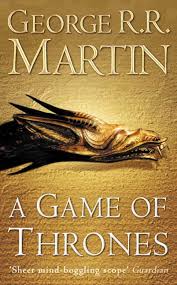
I got hooked on the HBO series, so now I just have to read the book. It's great as a historian to be able to read a story inspired by the medieval age, and not keep getting dragged out of the story by anachronisms and mistakes. What, they're drinking water? But pure water was undrinkable in the medieval age, that's why everyone drank beer. Even kids drank special 'light' beer. (This is a true fact). But wait, this is a fictional world! So people can drink the water.
*Any recommendations? Reading is an all round thing, I'll need new titles when I come back from holiday*
*These blog posts are scheduled, so I'll respond to any comments when I come back*
*Miss you all!*
Thursday 23 June 2011
Guilt-Free Cookies
Was sending off my sample chapters a proud experience? In a word: no. This had nothing to do with the significance of the moment, as much as the cantankerous postal worker who processed the envelopes. In fact, this woman seemed to hate her job so much that I have no reason to believe that my submissions are anywhere else but in a rubbish bin out the back. On the bright side, that means I'll get no rejection letters. It's an ill wind...etc.
Enjoy your evening all!
Tuesday 21 June 2011
Episodic Television and Instant Gratification
So, my husband and I aren't exactly hip. You'll see that this is true by dint of the fact that I used the word 'hip'. We're usually not on the up with whatever is currently fashionable, we're always a season or five behind. Nowhere is this more evident than when it comes to our television watching.We watched The Wire after it had been cancelled, we started Mad Men series one during Mad Men series four, and we finished watching the last episode of Arrested Development on Sunday.
 Ok, so watching television series later than everyone else has its downsides. You are at constant risk of spoilers. The jokes that your friends tell go right over your head. You feel out of the loop. But that's balanced by the fact that, when watching a show later, you can set the pace yourself. Cliffhanger at the end of an episode? Well, you can find out what happened right now. Sure, you may miss out on an hour or two of sleep/household chores/other important things, but it's still your choice.
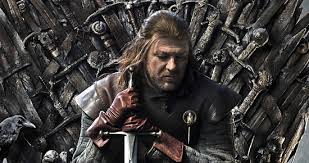
Recently. my husband and I started watching Game of Thrones. Yes, it's current, but two historians tuning into a fantasy show based loosely on the War of the Roses does not make us hip. Or whatever the cool kids are saying these days. But because of this, we're watching it at the same pace as everyone else. Almost every week there's a cliff-hanger and we're left, open-mouthed, staring at the credits in shock. 'What can we do? ' we ask each other. 'How can we find out what happens next?' But there's nothing we can do.
My husband cracked, and got the book a few weeks into the series. He finished earlier than the series, and is now on book two. He's dreading the moment when he reaches the end of book four...although book five is due to be released this summer.
Have we all become spoilt? There was something nice, albeit frustrating, to looking forward to something all week. It reminded me of the serialised stories that used to be released in parts during the Victorian age. What do you guys think? Is it better to get an entire story in one go? Or rationed out?
**After all the opinions I got in comments yesterday, I decided not to review the book. Thanks for the help guys!**
Recently. my husband and I started watching Game of Thrones. Yes, it's current, but two historians tuning into a fantasy show based loosely on the War of the Roses does not make us hip. Or whatever the cool kids are saying these days. But because of this, we're watching it at the same pace as everyone else. Almost every week there's a cliff-hanger and we're left, open-mouthed, staring at the credits in shock. 'What can we do? ' we ask each other. 'How can we find out what happens next?' But there's nothing we can do.
My husband cracked, and got the book a few weeks into the series. He finished earlier than the series, and is now on book two. He's dreading the moment when he reaches the end of book four...although book five is due to be released this summer.
Have we all become spoilt? There was something nice, albeit frustrating, to looking forward to something all week. It reminded me of the serialised stories that used to be released in parts during the Victorian age. What do you guys think? Is it better to get an entire story in one go? Or rationed out?
**After all the opinions I got in comments yesterday, I decided not to review the book. Thanks for the help guys!**
Monday 20 June 2011
In Review: When Does Being a Writer Trump Being a Reader?
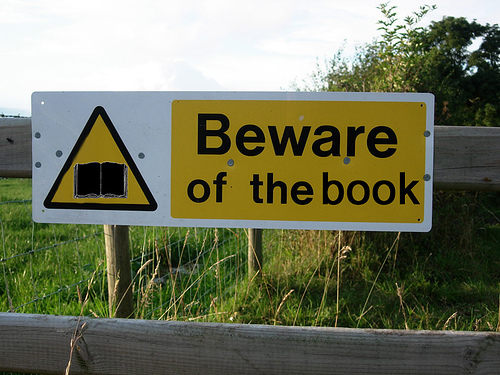 Reading is something I've always done. I always have a book on the go, I panic if I don't have books lined up for after I finish, and I would truly hate to see the figure for the amount I spend on books in an average year. It might be so high that I get truly upset. And then I may have to console myself...by reading yet another book.
Now, I've just finished a book that I thought was truly awful. I'm not going to name the book or the author, because this isn't the place to do that. But it was bad. The characters were unbelievable, the dialogue unrealistic and the same 'jokes' were repeated a number of times so that, despite being from a respectable publisher, I suspect the book wasn't properly edited.
I went to the Amazon page for the author (this seems very involved for a book I don't like, right? But in my defence I was desperately trying to avoid doing some actual work) and noticed that there were only a handful of reviews for the book. Even worse, they were all five star reviews, which I suspect means that these people were friends of the writer. Not that this is generally a bad thing, but good friend reviews are usually diluted somewhat by those from regular readers.
I was going to give a review giving my opinion on the book. Not a 'This book sux!!!!!' review, but a constructive layout of why I didn't like the book, phrased as nicely as possible. Why? So readers wouldn't see an unqualified high review, a different opinion. The idea of having a customer review function is, after all, to find out what customers think.
But, I stopped. While there was a part of me that was saying that I had a duty to my fellow readers to help them by giving an honest opinion, I also felt I had a duty to the writer. My desire to give a negative review was not motivated by spite or jealousy. I am not so self-important as to think that my opinion is the definitive opinion on anything, there may be something about this book that I didn't get. I'm not saying this author doesn't deserve her publishing deal, because she does. She isn't a debut author, so I'm sure my review would not be the first negative review that she received. I just wanted to give my opinion to other readers, because I like to read customer reviews myself, and because I thought it might be good to give something back to the reading community.
But as a writer (albeit an unpublished one) I couldn't do it. I know how hard it is to write a book, even a bad one. I wouldn't lie and give the book a positive review, but I couldn't give it a bad review. I don't know this woman. When I read The Hating Game by Talli Roland, I decided that if I liked it I would review it, if I didn't I wouldn't. Because I know her online, I'd feel awful saying something bad about her book. But I would feel awful lying with a fake review. Luckily, it was a great book, so there was no conflict there. But with a writer I didn't know, what was the problem?
What about all of you? Do you review books, and do you find that being a writer affects your reviews? Which is more important, solidarity to the reading community or the writing community? And is it possible for writers to be full members of both?
Sunday 19 June 2011
How to know what genre you write in...
Apparently there is a Facebook quiz to determine just about everything else, but none to help me put my book in a nice little slot.
I'm writing a synopsis and I need to state my genre in the opening line. Now, I know that I either write in chick-lit or contemporary women's fiction. But I'm not sure which one my book falls into. And Google is being no help at all.
My book is written in a light-hearted, irreverent register. That kind of points to chick-lit. But there's quite a dark event in the book. Does that point to contemporary women's fiction?
Does anyone know what the differences are between the two? I don't care which genre my book falls into, just don't want to get it wrong on my cover letters.
I'm writing a synopsis and I need to state my genre in the opening line. Now, I know that I either write in chick-lit or contemporary women's fiction. But I'm not sure which one my book falls into. And Google is being no help at all.
My book is written in a light-hearted, irreverent register. That kind of points to chick-lit. But there's quite a dark event in the book. Does that point to contemporary women's fiction?
Does anyone know what the differences are between the two? I don't care which genre my book falls into, just don't want to get it wrong on my cover letters.
Monday 13 June 2011
Review: The Hating Game by Talli Roland
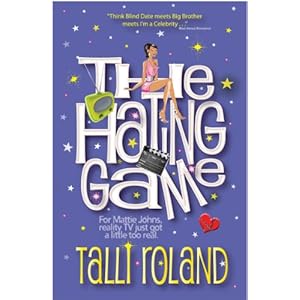
Anyway, lack of holiday reading material aside, The Hating Game by Talli Roland is a great book. It follows Mattie Johns, a woman with a reputation for going through men faster than some women eat chocolate, as she goes on a dating show in order to save her ailing business. Little does she know that the show will require her to go on dates with four of her exes. When she discovers this, she's unhappy but consoles herself with the thoughts of the prize money. After all, having her personal life splashed all over the national media is worth it for the money, right?
What's really interesting from the get-go, is that Mattie is not instantly likeable. If anything, she's the opposite. I didn't like her at the start of the book, and I couldn't warm to her. The plot was interesting though, and that carried me along until I gradually found myself softening towards the character as we discover exactly what's gone on in her life to bring her to this point. Just at the point where you start to root for her though, it turns out that not only is Mattie using the show for her own agenda, but she's just a pawn in the production team's plan to further their own careers. This may be her life, and the lives of the other contestants, but nothing is too personal to spin for publicity. But who will prevail?
This is chick-lit at it's best, light and entertaining but with serious issues at it's centre. The book looks at how traumatic events can change you. It also shows how judgemental society can be. I didn't like Mattie at the start, but as I learned more about her I realised why she acts the way she does, I made a harsh judgement without knowing the facts. It also looks at the darker side of reality television, and how the general public laps up the humiliation of others as entertainment. There are enough twists and turns to make the books ending a bit unpredictable, but the ending still feels natural. The language is sharp and witty, and Talli paces the plot perfectly.
The one criticism I have of this book, and to be honest I think the book should come with a disclaimer simply for this very reason, is that it is impossible to read this book without getting I Want You Back by the Jackson 5 stuck in your head on a loop. I'd thoroughly recommend it though, it's definitely a good summer read.
In other exciting news, remember how I said that I'd read some of my friend Krista's manuscript and loved her writing style? It seems that I'm not the only one. She's just gotten an offer of representation from an agent! How exciting is that? You should check out her blog here.
Hope everyone had a great weekend! :)
Tuesday 7 June 2011
Thematically Speaking...
Anyone who stays on top of happenings in the on-line book world is probably aware that an article was published in the Wall Street Journal over the weekend criticising contemporary young adult fiction. Now, I'm not going to take the article point by point and refute its claims, because many bloggers in the YA fiction community have already done so, more eloquently than I could put it. Instead, I'm going to look at the purpose of exploring 'dark' themes in books.
Outrage over the reading material available to our youth is nothing new. The Harry Potter series received a lot of criticism from parents who argued that the books promoted the occult. Just last year urban fantasy writer Richelle Mead, bestselling author of the Vampire Academy series, had the latest instalment of her series banned before she had even finished writing it.
One of the arguments in the article, was that the depiction of activities such as self-harm normalises the practice. I would argue that this is no bad thing. I knew girls who cut themselves when I was in school, and they were regarded as freaks. A well-written fictional story that includes cutting gives a voice to the practice, and develops a readers sense of empathy. The next time they see someone with cutting scars they might not think 'freak', they may realise that there is a lot going on inside that person's head and feel some compassion. Is that not what we want to instil in the young generation? Compassion? Dark issues happen in the teenage world, it doesn't do anyone any good to deny that.
Not every book is suitable for every teen, true. But parents should know what their kids are reading, and maybe read some of them too. If a book covers issues such as self-harm, talk about it with them.
I took a course on understanding literature, and one of the themes that we covered was the importance of the 'scare factor' in books for children and young adults. Part of their emotional development rests on 'experiencing' scary things in a safe environment, such as fear, despair, anxiety. As they follow a character on screen or in a book, they 'rehearse' the emotions that the character is feeling, and usually see a resolution in the happy ending. This means that when they themselves feel the emotions in real life, they're not completely knocked. And they keep their sense of hope. This is recognised by psychologists.
Plus, take an issue like drug-taking. Your parents may tell you about the dangers of taking drugs, but do teenagers always listen to their parents? If a character they admire in a book takes drugs and something bad happens, that will strengthen their resolve in a way that parental lectures (however well-meaning) won't.
I think keeping 'dark' issues away from teens underestimates their intelligence.
Outrage over the reading material available to our youth is nothing new. The Harry Potter series received a lot of criticism from parents who argued that the books promoted the occult. Just last year urban fantasy writer Richelle Mead, bestselling author of the Vampire Academy series, had the latest instalment of her series banned before she had even finished writing it.
One of the arguments in the article, was that the depiction of activities such as self-harm normalises the practice. I would argue that this is no bad thing. I knew girls who cut themselves when I was in school, and they were regarded as freaks. A well-written fictional story that includes cutting gives a voice to the practice, and develops a readers sense of empathy. The next time they see someone with cutting scars they might not think 'freak', they may realise that there is a lot going on inside that person's head and feel some compassion. Is that not what we want to instil in the young generation? Compassion? Dark issues happen in the teenage world, it doesn't do anyone any good to deny that.
Not every book is suitable for every teen, true. But parents should know what their kids are reading, and maybe read some of them too. If a book covers issues such as self-harm, talk about it with them.
I took a course on understanding literature, and one of the themes that we covered was the importance of the 'scare factor' in books for children and young adults. Part of their emotional development rests on 'experiencing' scary things in a safe environment, such as fear, despair, anxiety. As they follow a character on screen or in a book, they 'rehearse' the emotions that the character is feeling, and usually see a resolution in the happy ending. This means that when they themselves feel the emotions in real life, they're not completely knocked. And they keep their sense of hope. This is recognised by psychologists.
Plus, take an issue like drug-taking. Your parents may tell you about the dangers of taking drugs, but do teenagers always listen to their parents? If a character they admire in a book takes drugs and something bad happens, that will strengthen their resolve in a way that parental lectures (however well-meaning) won't.
I think keeping 'dark' issues away from teens underestimates their intelligence.
Saturday 7 May 2011
This above all, to thine own self be true
Since I loved books so much, I knew I wanted to be a writer from a young age. I was good at creative writing in school, so it seemed like a logical extension of my book addiction. My grandad tried to put me off by telling me that I'd never make any money as a writer so I should do something else. But I still wasn't deterred.
I wrote short stories and poetry, and some of them did well in competitions. But then there was my novel. I tried to write a novel so many times, but always fell at the first hurdle. Or the first chapter.
There were three main reasons why I didn't get very far. One was that I just didn't have the discipline yet. I expected to write a novel from start to finish, read over it a couple of times and submit it. If only it were that simple. Second of all, I couldn't turn off my inner editor. I would pour over the paragraphs that I'd written sighing internally. Now I write without pause for the first draft, then start to edit. And because I've had time to cool off I tend to find that the prose isn't as bad as I feared at the time.
But the big block to me writing my first novel, was that I was writing for other people. I love literary fiction, and I've read reams of it. Literary fiction is widely regarded as having more merit than popular or commercial fiction. I was writing a literary novel to impress other people, when every competition I'd won was for my more popular chatty style of writing. I was writing the book I wanted other people to think I'd written, rather than the book I wanted to write. Once I gave myself permission to be myself, the writing process became a lot easier and a lot more fun.
If you're going to finish your novel and write a book that other people will enjoy, you have to be true to yourself. That is the single most important piece of advice out there. And then maybe editors will liek ur submishuns.
P.S. I got a Versatile Blogger award from Michelle. How cool is that? Thanks Michelle :)
Saturday 23 April 2011
U is for...Ugh.

It's a lovely bank holiday weekend. The sun is shining, my husband is off work, there is a ridiculous amount of chocolate in my house. But I have decided to disregard all these things in order to have a rant thread.
My fibromyalgia has been bad this week. My hips and knees are so bad that I had to bow out of a fun game of rounders that my husband and his friends had organised. I was never going to be playing, I wouldn't be able to, but I knew that I wouldn't be able to stand and watch or sit on the grass either. So my husband went off on his own. He didn't want to leave him, but I made him go. He misses too many things due to my ropey health. Even so, I know that he'll be worried about me while he's there, and I feel so guilty for taking the shine off the day for him. And I really wanted to go out, enjoy the sunshine and chat to some nice people. I'm a bit down about that.
I had four of my siblings over yesterday for dinner. They're 7, 10, 11 and 14 and I love them to bits. We had a good time, but I struggled to seem cheery and upbeat for them because of the pain I was in. I really hope that they didn't pick up on it. They're only kids, and the last thing I want is for them to think I don't enjoy their company. I do, so much.
And then, of course, there's my writing. Despite resting my hands and arms, they're in bad shape and it hurts to write. This is bad, because I've reached a seam of writing where it's all flowing, and I'm in the middle of some intensive edits too. I can't work right now. Writing is what got me through my illness, and now I worry that physically my body can't do it.
Living with a long term illness is hard. Not only the pain, the nausea and the lack of energy, but you sometimes feel like you are losing yourself, the person you'd like to be and the person that you want to become. I think to be honest that that's the worst part of all.
I'm just having a bad day. Tomorrow will hopefully be better, and I'll remember that in the scheme of things I'm a very lucky woman. I've a great husband, a lovely family, I get to write a lot and have a lovely house and supportive friends. But right now? I need to vent.
Anyone who has a chronic illness, or knows someone who has should check out The Spoon Theory by Christine Miserandino. It gives a great explanation on what being ill feels like on a day to day basis, and my husband said it really helped him realise what it's like to be me.
Hope this all finds you well, and that you have a great Easter. I'm going to go cuddle my dog, drink copious amounts of tea and read a book.
Thursday 14 April 2011
N is for...Novel Status
Thanks for all the good wishes. The keys have been located, and all is well. At least until we lose something else.
I write in two genres. Young adult urban fantasy and women's contemporary fiction.I usually have two projects on the go at any one time. I just find it easier that way.
Young Adult:
 Ravensborough: Fantasy novel set on an island plagued with divisions and the supernatural. Currently on hold until April 26 when I find out whether it has made it through to the semifinals of the Amazon Breakthrough Novel Award. If it hasn't, I'll start submitting it to prospective publishers in May.
Guildhall: A work in progress. I'm working on the first draft, but have a long way to go before it's complete. I have about 11,000/70,000 words written.
Women's Contemporary Fiction:
Storms in Teacups: This is pretty much finished. I'm doing a last polish to bring it up to standard. I hope to start submitting it to agents in May.
If Life Gives You Lemons: Also a work in progress. Currently at 23,000/120,000.
I recently found out that I have to write a query letter in order to submit to a couple of agents. In Ireland and the UK the process is usually cover letter + sample chapters + synopsis. Does anyone know what the differences are between a submission cover letter and a query?
I write in two genres. Young adult urban fantasy and women's contemporary fiction.I usually have two projects on the go at any one time. I just find it easier that way.
Young Adult:
Ravensborough: Fantasy novel set on an island plagued with divisions and the supernatural. Currently on hold until April 26 when I find out whether it has made it through to the semifinals of the Amazon Breakthrough Novel Award. If it hasn't, I'll start submitting it to prospective publishers in May.Guildhall: A work in progress. I'm working on the first draft, but have a long way to go before it's complete. I have about 11,000/70,000 words written.
Women's Contemporary Fiction:
Storms in Teacups: This is pretty much finished. I'm doing a last polish to bring it up to standard. I hope to start submitting it to agents in May.
If Life Gives You Lemons: Also a work in progress. Currently at 23,000/120,000.
I recently found out that I have to write a query letter in order to submit to a couple of agents. In Ireland and the UK the process is usually cover letter + sample chapters + synopsis. Does anyone know what the differences are between a submission cover letter and a query?
Sunday 10 April 2011
K is for...Kindle
When I first heard of ereaders, I was disgusted. I was a bit of a purist, the idea of a machine didn't appeal to me. I love the feel of the paper, the smell of a new book, the smell of an old book (I do have two history degrees after all) the whole sensation of reading a proper book. But slowly I'm beginning to change my mind. Partly, it's because my illness makes it difficult for me to hold a book for a long time. I spent a day reading a couple of weeks ago, and spent the next day in pain with heat pads on my wrists. The thought of not reading, or even of reading less horrified me. I'm addicted to books. I read every day, and get uneasy if I can't for some reason. I get antsy if I don't have another couple of books lined up for when I finish my current one. I like the fact that if I'm too sore to leave the house, I can still buy books.
So, still not enthusiastic, my husband and I went to PC World to look at various readers. I'm not mad on the iPad or the Sony reader, so we looked at the Kindle. It was really light, much lighter than a standard book. But I still wasn't sure. I decided to think about it. I mean, we're not exactly rolling in money right now, and we can't afford to pay that much for a machine I think I might use.
But then something happened that changed my mind. For we are moving house. My husband packed loads of boxes of books last week. I packed loads of boxes today. We gave some books away to charity. And you know what? We still have an entire bookcase left to go. It's not good for my back, my wrists or my hips and I'm sore now. I could store 3,500 books on my Kindle, I think that's a good investment. So I think if I get knocked out of ABNA on April 26 then I'm going to buy myself a Kindle to reward myself for getting so far.
Is it true that I can lend ebooks to other Kindle users if I have one myself? Or is that just a scurrilous rumour?
So, still not enthusiastic, my husband and I went to PC World to look at various readers. I'm not mad on the iPad or the Sony reader, so we looked at the Kindle. It was really light, much lighter than a standard book. But I still wasn't sure. I decided to think about it. I mean, we're not exactly rolling in money right now, and we can't afford to pay that much for a machine I think I might use.
But then something happened that changed my mind. For we are moving house. My husband packed loads of boxes of books last week. I packed loads of boxes today. We gave some books away to charity. And you know what? We still have an entire bookcase left to go. It's not good for my back, my wrists or my hips and I'm sore now. I could store 3,500 books on my Kindle, I think that's a good investment. So I think if I get knocked out of ABNA on April 26 then I'm going to buy myself a Kindle to reward myself for getting so far.
Is it true that I can lend ebooks to other Kindle users if I have one myself? Or is that just a scurrilous rumour?
Tuesday 5 April 2011
E is for...Eireann
Ok, I'm slightly changing the rules here, because Eireann is an Irish word, not an English one. But then again, who said that the words had to be in English.
Eireann means Ireland, and it's the country where I was born and I've lived here all my life. I love it. Not in a republican, nationalistic sense, but in a more familial way. Yes it has bad points. Yes it's tiny. Yes it rains most of the time. Yes we have hit the international headlines this past year for all the wrong reasons. But it's home.
I like the landscape, I like the people and I like the way we have an ability to laugh at ourselves. I even, God help me, like the rain. But what I'm proudest of, is the fact that despite being a poor nation for most of our existence, and despite having a small population, we have produced a lot of great literature. From Joyce and Wilde to Yeats and Shaw. A lot of our current female writers, Maeve Binchy, Marian Keyes, Cecelia Ahern and Cathy Kelly sell copies of their books worldwide.
Dublin City, where I live, is a UNESCO City of Literature. And amid all the recessionary doom and gloom, the unemployment, our national debt, I think that is something to be proud of.
Eireann means Ireland, and it's the country where I was born and I've lived here all my life. I love it. Not in a republican, nationalistic sense, but in a more familial way. Yes it has bad points. Yes it's tiny. Yes it rains most of the time. Yes we have hit the international headlines this past year for all the wrong reasons. But it's home.
I like the landscape, I like the people and I like the way we have an ability to laugh at ourselves. I even, God help me, like the rain. But what I'm proudest of, is the fact that despite being a poor nation for most of our existence, and despite having a small population, we have produced a lot of great literature. From Joyce and Wilde to Yeats and Shaw. A lot of our current female writers, Maeve Binchy, Marian Keyes, Cecelia Ahern and Cathy Kelly sell copies of their books worldwide.
Dublin City, where I live, is a UNESCO City of Literature. And amid all the recessionary doom and gloom, the unemployment, our national debt, I think that is something to be proud of.
Saturday 2 April 2011
B is for Books!
I'm starting to feel a little like I'm on Sesame Street. You know, 'This blog post has been brought to you today by the letter B.' Or something.
Anyway, as I'd rather read a book than do just about anything else, I decided to list the books that have had the biggest impact on my life.
Number Five: Rachel's Holiday by Marian Keyes
I love this book. Not only does it talk about drug addiction and recovery, but manages to do so in a way that is funny but doesn't take away from the seriousness of the topic. It always makes me laugh, and it shows that women's fiction isn't all handbags and cocktails (though I do love both).
Number Four: Mallory Towers Series by Enid Blyton
In fact, I liked all of Blyton's British Boarding School books. I was enchanted by it, probably because I was an only child at the time, and used to read them in bed, pretending that my bed was part of a dormitory and that I was at boarding school, waiting for the lights to go out so I could steal off with my school friends and have a midnight feast. Of course, I'm a complete home bird who would have cried my entire way through boarding school, but that's another matter.
Number Three: The Bell Jar, by Sylvia Plath
I love this book. I wish she had written more books, but I reread this every so often. I love the imagery, and the way she manages to convey the sense of entrapment through her sentence structure. I think every woman should read this book.
Number Two: Vampire Academy, by Richelle Mead
Confession: I love young adult novels. The teenage years are so exciting, your character is starting to form, you're beginning to make decisions for yourself, and your future could go literally anywhere. I liked how Mead too real vampire mythology and wove it into her books, and it made me think that maybe I could do the same with my historical knowledge, use it to form a supernatural but realistic society. So I did, and I wrote Ravensborough.
Number One: Nineteen Eighty-Four by George Orwell and Brave New World by Aldous Huxley.
All right, so strictly these are two novels, but my Dad gave them to me together so I could compare two types of dystopian worlds and ideologies. He asked me to decide which society I'd rather live in, one that was repressive or one in which everyone was programmed to believe they were happy. That was ten years ago, and I still haven't made up my mind.
Anyway, as I'd rather read a book than do just about anything else, I decided to list the books that have had the biggest impact on my life.
Number Five: Rachel's Holiday by Marian Keyes
I love this book. Not only does it talk about drug addiction and recovery, but manages to do so in a way that is funny but doesn't take away from the seriousness of the topic. It always makes me laugh, and it shows that women's fiction isn't all handbags and cocktails (though I do love both).
Number Four: Mallory Towers Series by Enid Blyton
In fact, I liked all of Blyton's British Boarding School books. I was enchanted by it, probably because I was an only child at the time, and used to read them in bed, pretending that my bed was part of a dormitory and that I was at boarding school, waiting for the lights to go out so I could steal off with my school friends and have a midnight feast. Of course, I'm a complete home bird who would have cried my entire way through boarding school, but that's another matter.
Number Three: The Bell Jar, by Sylvia Plath
I love this book. I wish she had written more books, but I reread this every so often. I love the imagery, and the way she manages to convey the sense of entrapment through her sentence structure. I think every woman should read this book.
Number Two: Vampire Academy, by Richelle Mead
Confession: I love young adult novels. The teenage years are so exciting, your character is starting to form, you're beginning to make decisions for yourself, and your future could go literally anywhere. I liked how Mead too real vampire mythology and wove it into her books, and it made me think that maybe I could do the same with my historical knowledge, use it to form a supernatural but realistic society. So I did, and I wrote Ravensborough.
Number One: Nineteen Eighty-Four by George Orwell and Brave New World by Aldous Huxley.
All right, so strictly these are two novels, but my Dad gave them to me together so I could compare two types of dystopian worlds and ideologies. He asked me to decide which society I'd rather live in, one that was repressive or one in which everyone was programmed to believe they were happy. That was ten years ago, and I still haven't made up my mind.
Thursday 31 March 2011
Revisions, Revisions, Revisions
After coming down from my Amazon Breakthrough Novel Award high, I got back to work. At the moment I'm giving urban fantasy a break, and am concentrating on writing the first draft of my new novel If Life Gives You Lemons and revising Storms in Teacups for submission.
Why is revising so hard? When I was a kid and dreamed of being a writer, I thought you wrote the story from beginning to end, and that was it. Done. How I wish it were so.
The hard part for me about revision is that it means rereading my own work. And sometimes that's okay. I find blocks of text that are much better than I thought, dialogue I laugh out loud at, (it's sad to admit you find your own books amusing, isn't it?) and that part is quite good for oul' ego. However, there are still bits that require yet more work, and that I think are awful. And that is, quite frankly, disheartening.
What's especially difficult about this revision, is that it's for the Final Draft (cue scary music). In my previous edits, if something wasn't flowing I didn't stress about it too much. I reckoned that I could sort it out in another edit. But as this is my final one, I have to iron out every little snag so I can send it out into the world.
To this end I took out a roll of Christmas paper, unrolled it on the living room floor, and started to write out the main plot points and characters in a selection of brightly coloured Sharpie felt tip pens. Not very dignified, but the best I can do until I can afford to buy a white board. I feel a lot better now, I've clarified some of the most important elements of the story in my head which was good.
How do all you other writers out there cope with the editing process?
Why is revising so hard? When I was a kid and dreamed of being a writer, I thought you wrote the story from beginning to end, and that was it. Done. How I wish it were so.
The hard part for me about revision is that it means rereading my own work. And sometimes that's okay. I find blocks of text that are much better than I thought, dialogue I laugh out loud at, (it's sad to admit you find your own books amusing, isn't it?) and that part is quite good for oul' ego. However, there are still bits that require yet more work, and that I think are awful. And that is, quite frankly, disheartening.
What's especially difficult about this revision, is that it's for the Final Draft (cue scary music). In my previous edits, if something wasn't flowing I didn't stress about it too much. I reckoned that I could sort it out in another edit. But as this is my final one, I have to iron out every little snag so I can send it out into the world.
To this end I took out a roll of Christmas paper, unrolled it on the living room floor, and started to write out the main plot points and characters in a selection of brightly coloured Sharpie felt tip pens. Not very dignified, but the best I can do until I can afford to buy a white board. I feel a lot better now, I've clarified some of the most important elements of the story in my head which was good.
How do all you other writers out there cope with the editing process?
Subscribe to:
Posts (Atom)